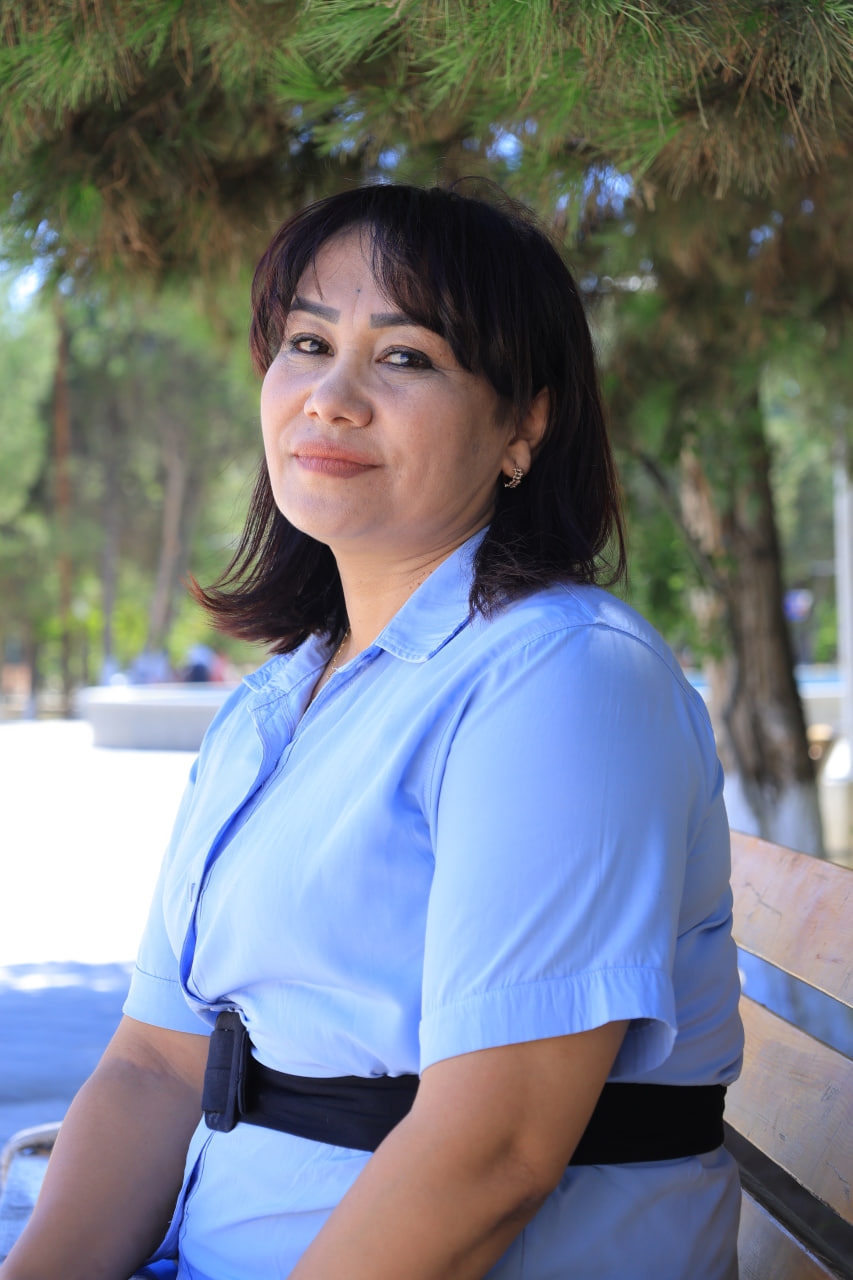
Most technology founders build a product first and seek outside validation afterward. Nurshoda Aramova's path has run in something closer to the opposite order: her standing as a published researcher and a recognized contributor to her field was already established before her platform, Hisobchi AI, reached the public.
Aramova holds a degree in economics from Karshi State Technical University, with a specialization in sectoral and branch economics, completed in 2025. She subsequently pursued training in computer engineering and information technology, giving her a working command of both economic analysis and software development — a combination that later became the foundation of her project.
Her academic output consists of two peer-reviewed articles. The first, "Human Capital and the Brain Drain Question: Education Investment versus Skilled Labor Emigration in Uzbekistan," appeared in the American Journal of Multidisciplinary Bulletin. The second, "Special Economic Zones and Foreign Direct Investment: Evaluating Uzbekistan's Free Economic Zone Model," was published in the Journal of Scientific Research, Modern Views and Innovations. Both examine structural questions in Uzbekistan's economy — how the country retains skilled labor, and how it attracts and manages foreign investment through its free economic zones.
Publication was followed by a further step: invitation onto two editorial boards. Aramova serves as an editorial board member of the international scientific journal New Renaissance and of the Journal of Entrepreneurship and Pedagogy. In practice, editorial board membership means evaluating and recommending other researchers' submissions for publication — a role that sits on the assessment side of scholarly work rather than the authorship side, and one typically extended only after a researcher's own output has demonstrated the judgment required to review others'.
That professional and scientific record has also drawn formal recognition. The Scientific Academy Research Center named her the winner of the "El-Yurt Faxri" international scientific-practical review competition, held across CIS countries, and separately awarded her the national title "Devotee of One's Profession" ("O'z Kasbining Fidoyisi") — a recognition specifically directed at individuals whose contribution to their field goes beyond what their formal position requires.
It is against this backdrop that Hisobchi AI takes shape. The platform is an AI-based accounting and compliance advisor built for Uzbekistan's small and medium-sized businesses, addressing four practical problem areas: guidance on the 1C:Enterprise 8.3 accounting software used by most Uzbek enterprises; core bookkeeping fundamentals for owners without in-house accountants; a continuously updated Tax Code knowledge base paired with a calculator comparing turnover tax against standard and simplified VAT regimes; and labor-law compliance support for businesses hiring their first employee. The system is deliberately not built on open-ended AI reasoning for its highest-stakes output — tax-regime selection is handled by a separate, deterministic calculation engine — and every session closes by directing the user to a licensed accountant or lawyer for final confirmation.
The platform is set to launch through Telegram, used daily by roughly 85 percent of Uzbekistan's population, a choice intended to remove the adoption barrier that new standalone applications typically face among small-business users. According to Uzbekistan's State Statistics Committee, the country counted more than 1.2 million active small business entities as of April 2026, generating over half of GDP, while professional accounting services remain concentrated in Tashkent and a small number of regional centers — leaving business owners elsewhere, particularly in regions such as Khorezm, Syrdarya, and Bukhara, with comparatively limited access.
Taken together, Aramova's research publications, editorial responsibilities, and competition recognitions form a body of work that existed independently of Hisobchi AI before the platform was conceived. That sequence — credibility established first, application built second — is, in her own account, precisely why she believes the project is positioned to succeed where a purely commercial pitch might not: it rests on a documented track record of analyzing the country's economic structure, not on the platform's promise alone.